The 17th edition of the National Conference “Ionising Radiation in Medicine” PJOMED 2026 organised by the National Centre for Radiation Protection in Health Care was held on June 1-2, 2026, in a hybrid format. The venue was the historic Alfred Biedermann Palace at 1/5 Franciszkańska Street in Łódź. The conference was also streamed on the pjomed.pl website and via an online platform enabling active remote participation in the event. Conference guests – both those present in person and those participating remotely – had the opportunity to contribute to discussions and share their own experiences or insights on the topics presented.
The conference was chaired by Dariusz Kluszczyński, Director of the National Centre for Radiation Protection in Healthcare, and the Deputy Director, Adam Grabowski. Speakers at the opening included: Joanna Kujawa, Head of the Environmental Health Division at the Department of Public Health, Ministry of Health; Andrzej Głowacki, President of the National Atomic Energy Agency; Klaudiusz Komor, Vice-President of the Supreme Medical Council; Krzysztof Składowski, National Consultant for Radiation Oncology; Rafał Czepczyński, President of the Polish Society of Nuclear Medicine and Leszek Królicki, National Consultant for Nuclear Medicine. These speeches were linked to the honorary patronage of the Conference by: the Minister of Health, the President of the National Atomic Energy Agency, the National Consultant for Radiology and Diagnostic Imaging, the National Consultant for Nuclear Medicine, the National Consultant for Radiation Oncology, the National Consultant for Medical Physics, the President of the Supreme Medical Council, the Polish Society of Nuclear Medicine, the Polish Medical Society of Radiology, and the Polish Society of Medical Physics.
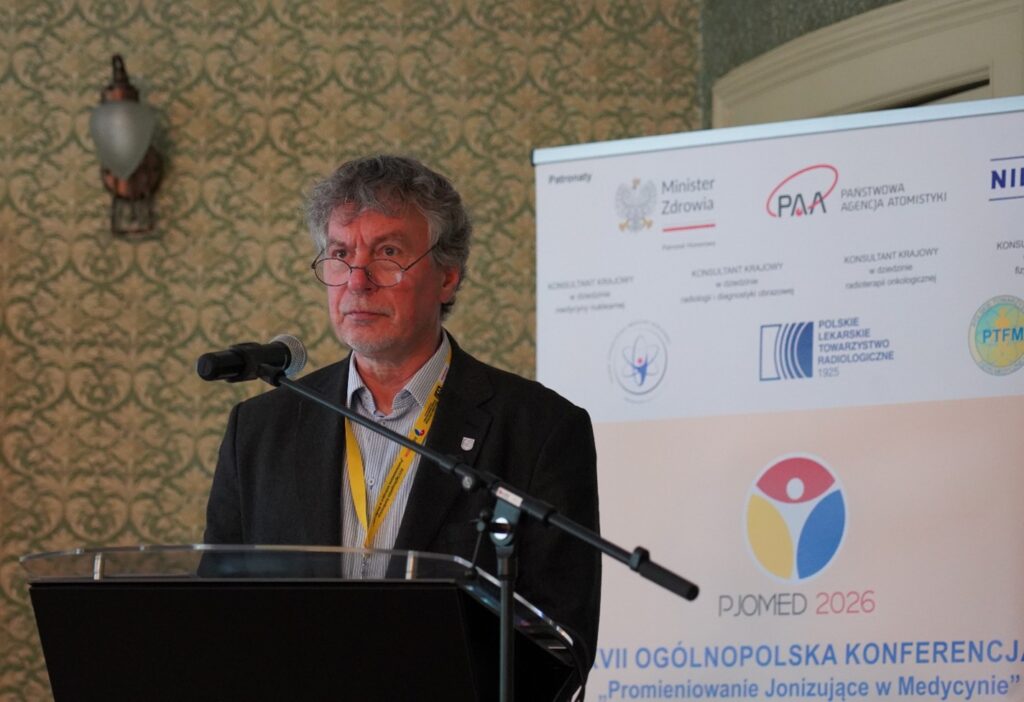
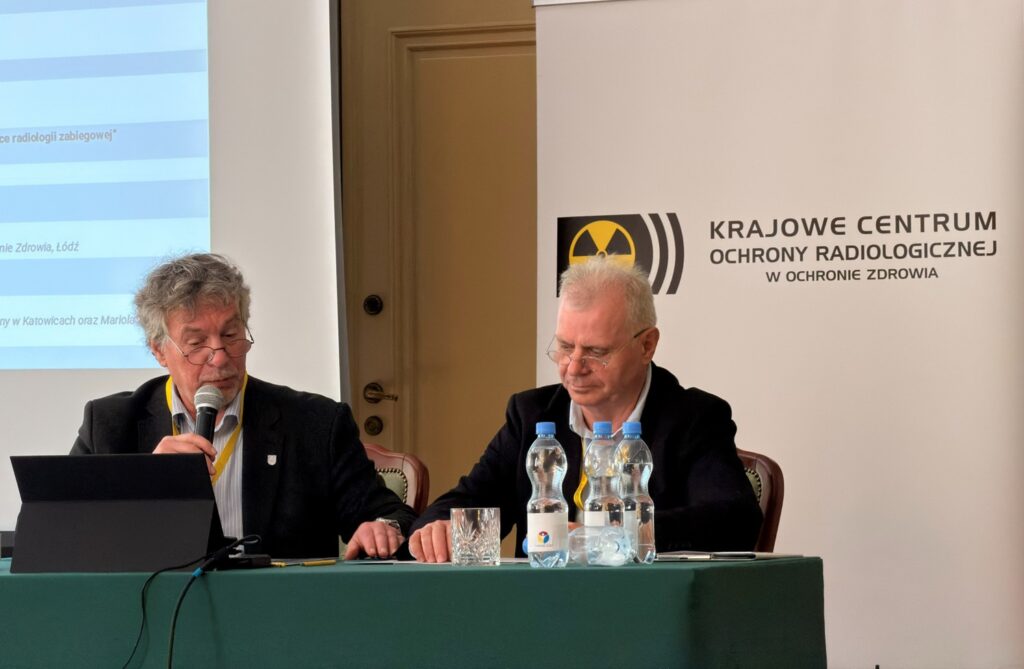
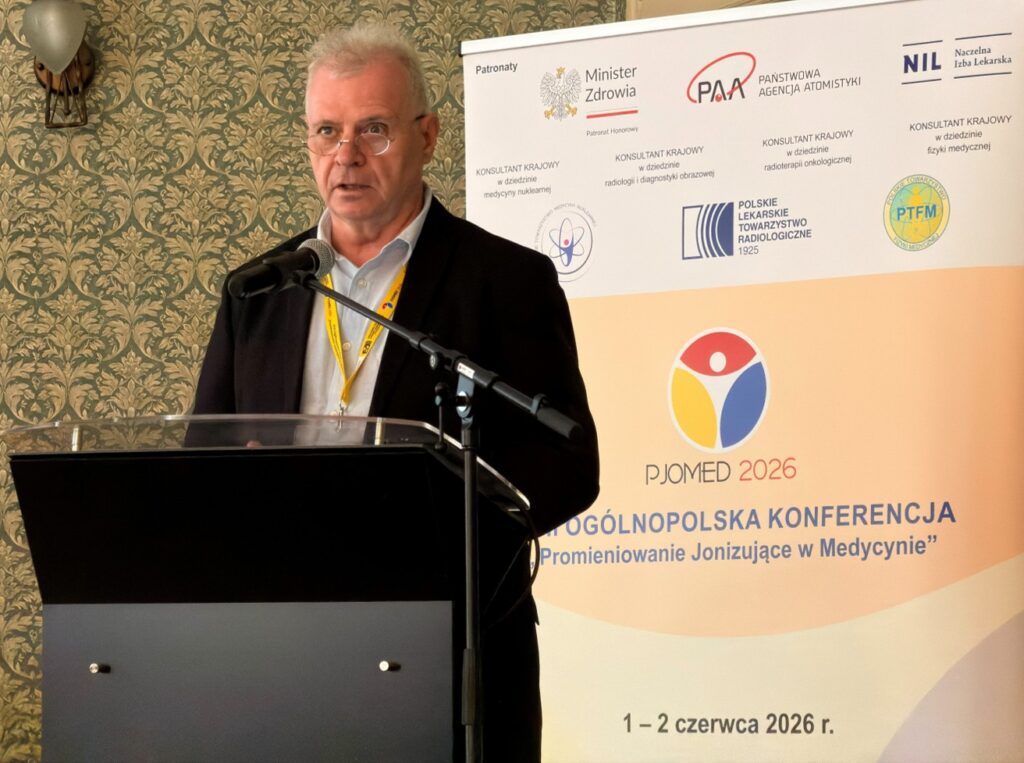
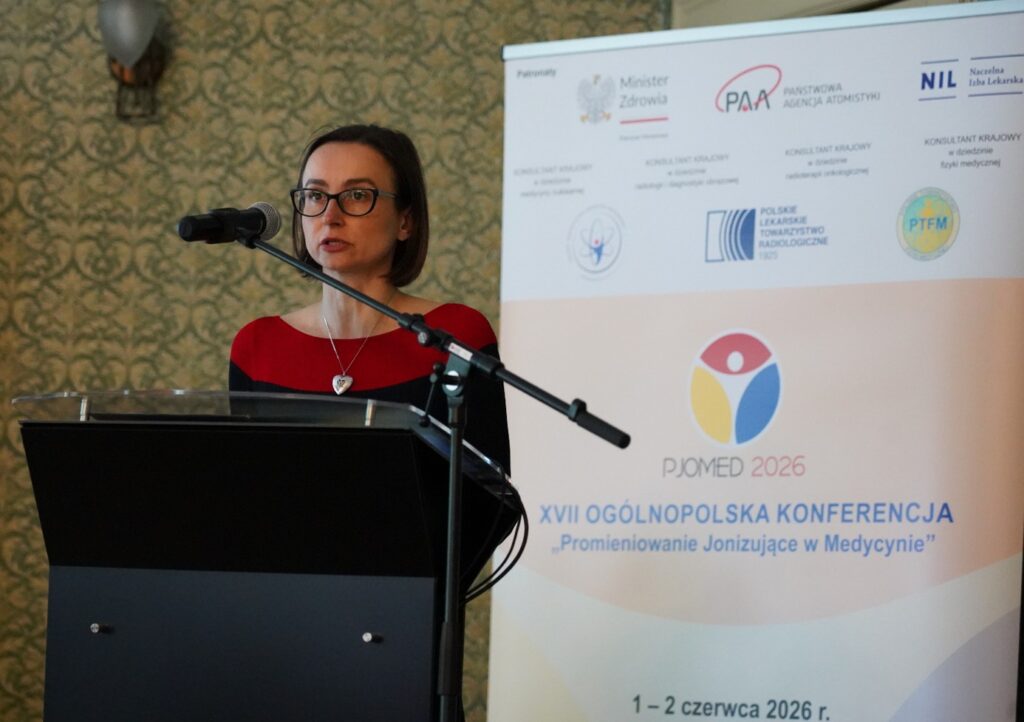
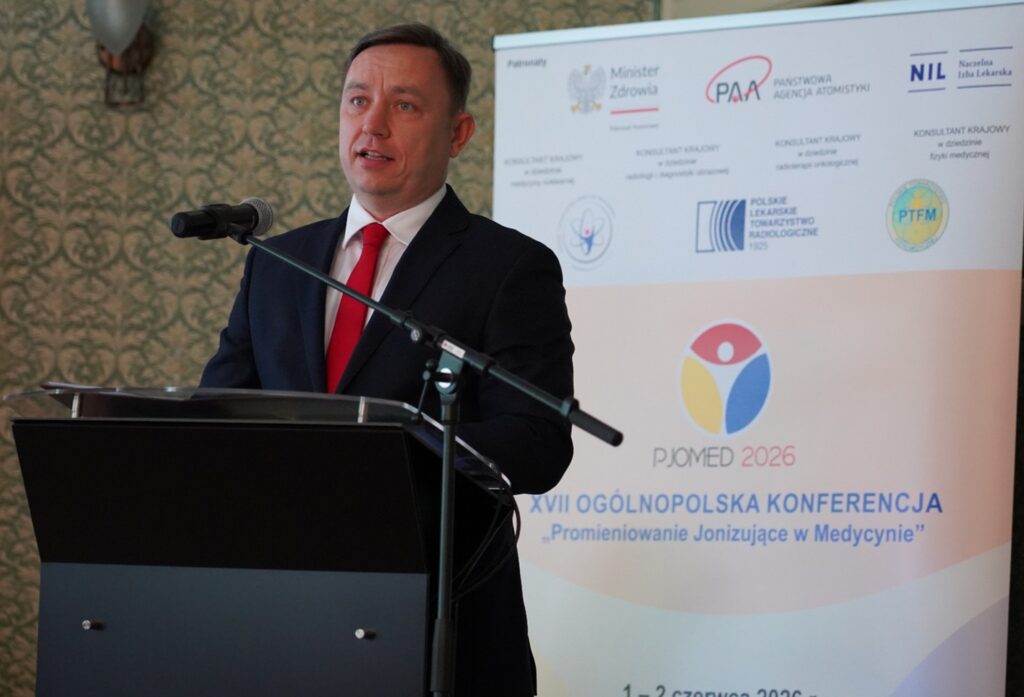
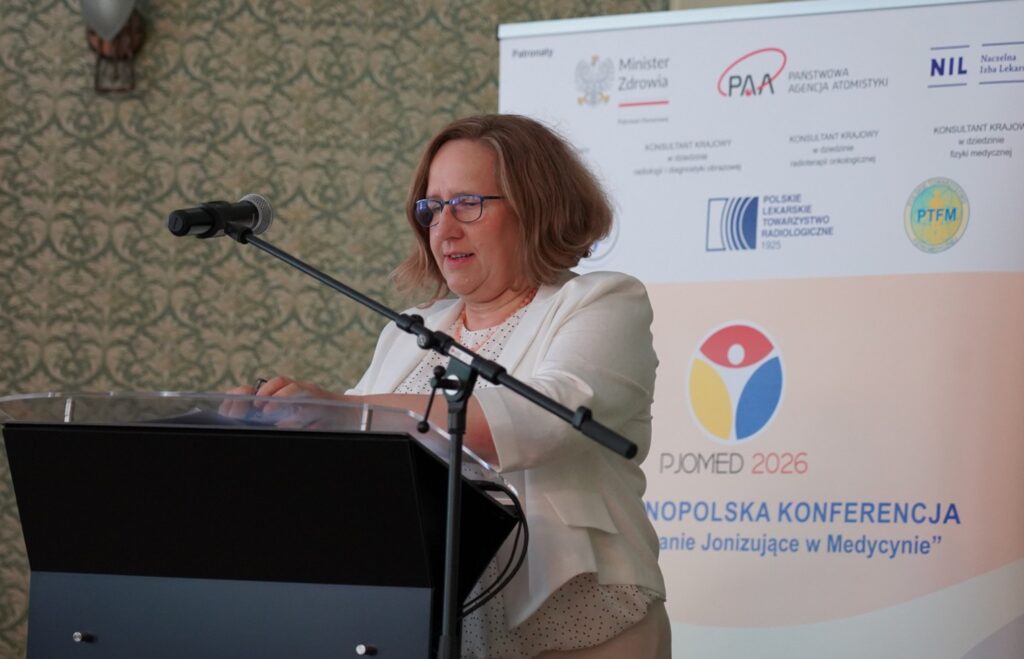
The first day of the Conference addressed topics combining a historical perspective with the current state of public health and safety. Colonel Tadeusz Nierebiński, Chief Sanitary Inspector of the Polish Army, presented the history of epidemiology in Poland. The role of the State Sanitary Inspection authorities in supervising the safe use of ionising radiation in medicine was presented by Monika Zakrzewska, Head of the Department of Radiation Hygiene at the Chief Sanitary Inspectorate. Issues related to artificial intelligence, including the AI Act (Regulation (EU) 2024/1689 of the European Parliament and of the Council of 13 June 2024), and the impact of AI on daily work in healthcare and patient safety, were presented by Rafał Lityński from CSIRT CeZ e-Health Center and Dr. Rafał Jóźwiak from the Centre for Innovation in Digital Medicine at OPIPIB.
Dr. Michał Biegała, PhD (Physics), regional consultant in medical physics, presented preliminary proposals for changes to quality control tests for radiological equipment, drawn up by the Polish Society of Medical Physics (PTFM). Dr Dariusz Kluszczyński, MSc (Eng), then presented the current assessment of medical exposure in Poland. This was followed by a discussion of practical experiences in implementing low-dose techniques in the diagnosis and treatment of cerebral aneurysms (Dr. Mariusz Sowa, MD, from the University Clinical Hospital in Olsztyn) and monitoring of the dose to the lens of the eye using EYE-D dosimeters (Dr. Joanna Sowa, MD, from the University Clinical Hospital in Olsztyn). To conclude the first day of the conference, Prof. Maciej Budzanowski, PhD, Eng., from the Institute of Nuclear Physics of the Polish Academy of Sciences in Kraków, delivered a lecture on public exposure to ionising X-ray radiation 131 years after Roentgen’s discovery.
On the second day of the conference, the focus was on optimising patient radiation protection and managing adverse events in interventional radiology.
Prof. Andy Rogers from Nottingham University Hospitals NHS Trust in the UK presented methods for assessing skin dose and the management of radiation-induced skin reactions. This was followed by a discussion of: the POL9029 project promoting the improvement of safety culture in interventional radiology (Karolina Kacprzak from NCRPHC); the implementation of clinical audits in accordance with the provisions of the Atomic Law Act (Katarzyna Jeziorska from NCRPHC); and issues concerning the quality control of medical image display devices (Adam Grabowski, Deputy Director of NCRPHC). In addition, the results of analysis concerning the exposure of paediatric patients during computed tomography examinations were presented (Beata Englisz-Jurgielewicz, PhD in Physics and Engineering, from the Radiological Measurements Laboratory at GL CENTER Sp. z o.o.). To conclude the second day of the conference, a presentation on an innovative approach to radiation protection using lead-free composite materials was given by students: Julia Bury from the Medical University of Silesia in Katowice and Bartosz Kępski from the Silesian University of Technology in Gliwice.
The event was very well attended. Over 180 people took part in this year’s edition, with the majority travelling to Łódź for the proceedings. Participants included, amongst others: doctors, physicists, representatives of the State Sanitary Inspection across the country, representatives of academic institutions from Łódź, radiation protection inspectors, representatives of healthcare institutions from across the country, and students.
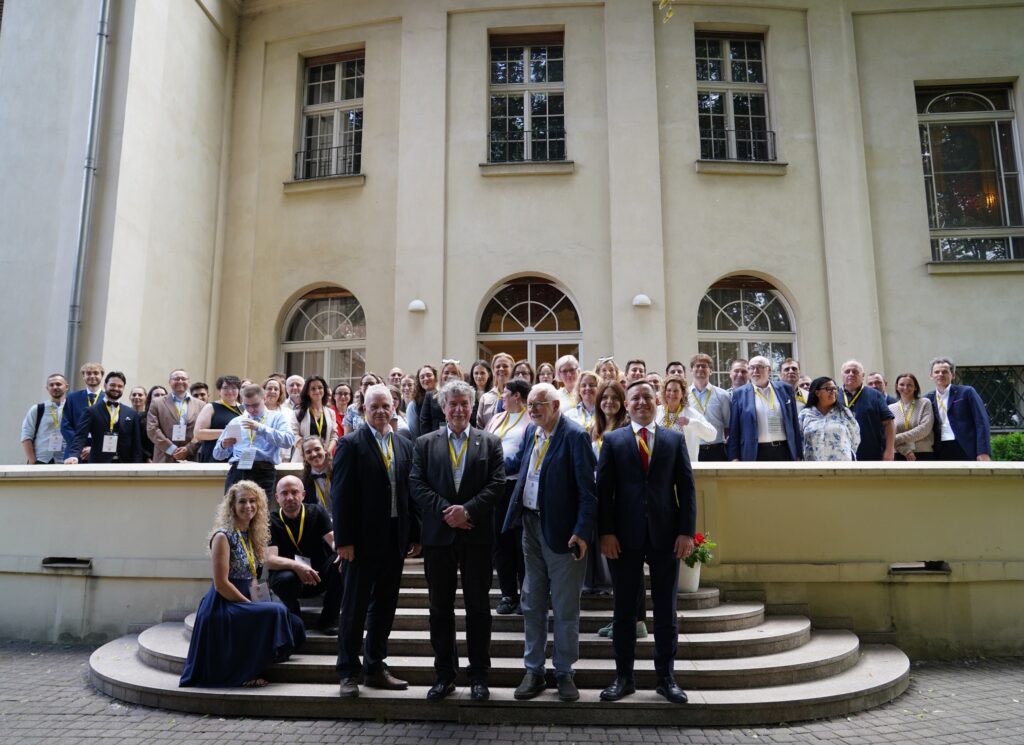
The Organising Committee of the 17th National Conference “Ionising Radiation in Medicine” PJOMED 2026 would like to express its gratitude to all Conference participants for their keen interest and positive reception of the event.
We look forward to seeing you at the next edition in 2027!